Quick Answer: Listen to the Current State, Then Confirm One Action
To play the BOMBANANA soundboard module safely, identify the panel, freeze the current audio state, describe each cue in a fixed order, let the manual reader select the current branch, repeat one action, and listen again after the input. A beep, tone, rhythm, or silence is evidence for the current run. It is not proof that every build uses the same sequence.
The official Steam listing confirms the three-player cooperative bomb-defusal context, but it does not publish a permanent soundboard answer table. A useful guide therefore teaches the information handoff: the handler owns the live panel, the manual reader owns the rule branch, and the bridge owns the final instruction. This gives a team something it can verify even when a community clip uses different audio or a different build.
What the Soundboard Module Search Is Really Asking
The exact phrase joins several nearby needs. Some players want to recognise an audio panel, some search for a soundboard module tutorial, and others want a solution after a cue changed. Those needs belong to one narrow module workflow, while broader questions stay on existing pages such as the BOMBANANA modules guide and the manual guide. Keeping the boundary clear prevents a generic manual article from swallowing a useful audio-specific answer.
| Search signal | Likely need | Best action here | Do not promise |
|---|---|---|---|
| how to play soundboard module bombanana | Recognise and operate an audio panel | Use the listening order below | A fixed sound sequence |
| bombanana soundboard module tutorial | Learn the handoff | Use the role table and example callout | An unofficial PDF |
| soundboard module solution | Recover from a stuck state | Stop and rescan the current cues | A universal solver |
| bombanana manual | Understand all roles and modules | Continue to the manual guide | Making this page the full manual |
Use the piano module guide when the question is about keyboard-like input, the calculator module guide for number panels, and the switch module guide for toggle states. The search term is related to those topics, but its first evidence is audio order and current sound state.
Five Steps to Read a BOMBANANA Soundboard Panel
A soundboard callout should separate what the handler hears from what the manual reader concludes. Keep the order stable even if a cue seems obvious. Stable language makes it possible to catch a missed sound before the handler commits an input.
- Name the module. Say “soundboard module” only when everyone agrees that the same audio panel is in view. If the category is uncertain, describe the controls without guessing.
- Freeze the viewpoint. Choose panel-left to panel-right, then top-to-bottom. Do not switch to the listener’s camera perspective halfway through.
- Record every cue. Note tone, rhythm, duration, silence, repeated sounds, and the control position that produced them. Mark an unclear cue as unknown instead of filling it in from memory.
- Record visual state. Add lights, labels, highlighted buttons, timer state, borders, and any icon that changes alongside the audio.
- Pause before input. Finish the observation, let the manual reader choose the branch, repeat one action, and wait for the result.
A complete example sounds like: “Soundboard, two rows. Top left short beep, top right long tone, bottom left silent, bottom right two clicks. Green indicator is lit; no button pressed.” It gives the manual reader a structured fact set without pretending that the example is a solution.
A Three-Player Soundboard Relay
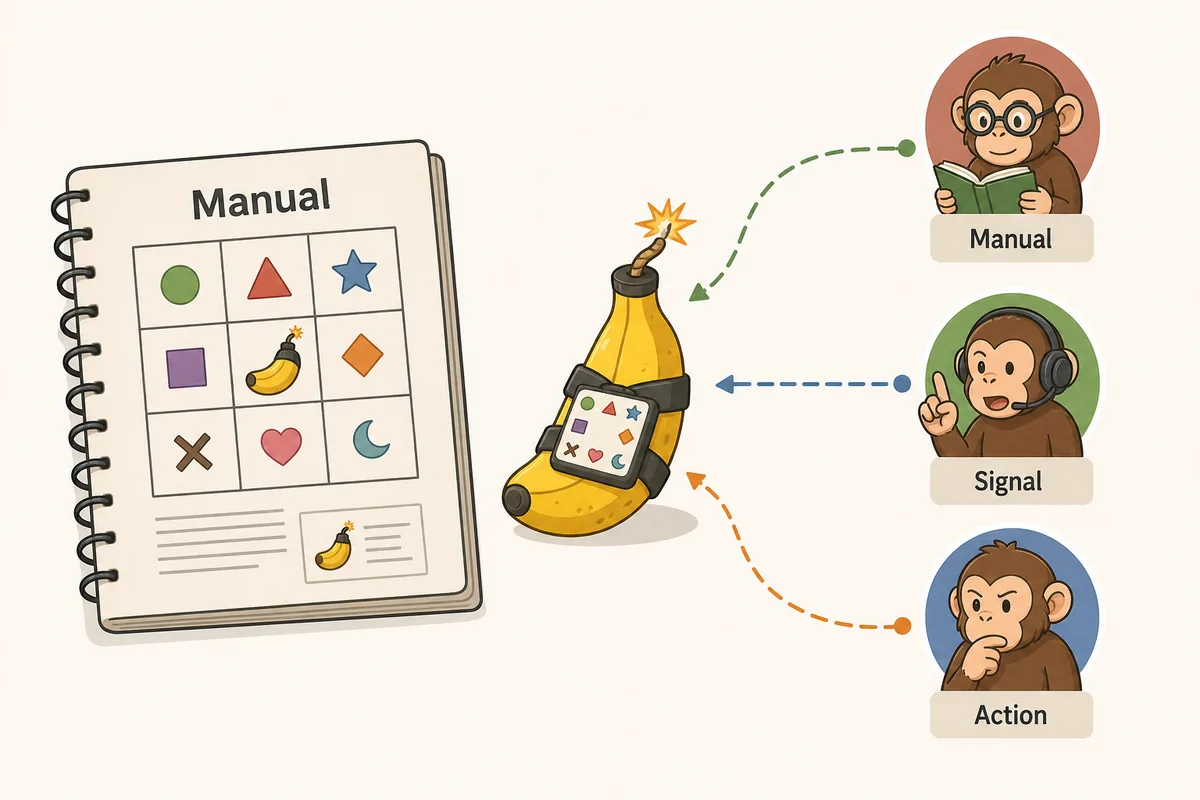
BOMBANANA works best when one player owns each part of the decision. The handler listens to the live panel, the manual reader interprets the current rule, and the bridge repeats one confirmed action. This is the same role boundary used by the signal protocols guide, narrowed to audio evidence.
| Role | Owns | Useful sentence |
|---|---|---|
| Handler | Cue order, sound length, silence, indicators, and post-action state | “Top row: short beep, long tone; bottom left silent; border lit.” |
| Manual reader | Current branch and the missing fact needed to choose an action | “I have the branch. Repeat whether the second tone is longer.” |
| Bridge | One confirmed action, stop, repeat, or new-state call | “Press the lower-right control once, then wait.” |
Do not compress a full report into “press the loud one.” That phrase loses order and position, so a perspective error cannot be corrected. If two teammates give different instructions, stop the handler and return to the last complete observation. For the wider sequence, continue to the BOMBANANA walkthrough.
What to Do When a Sound or Indicator Changes
A new tone, a missing cue, a changed light, a moved control, or a timer transition is a new state. Say “new state,” pause input, and report the relevant panel again. Do not keep arguing about whether an old audio sequence should still work while the evidence has changed.
- Stop. The handler leaves controls alone until the sound is stable.
- Mark the change. Name the cue, control, or indicator that moved and the action before it.
- Re-listen from the start. Use the original order so the manual reader can compare the states.
- Confirm one action. The bridge repeats the current instruction and waits for acknowledgement.
- Record the result. Say solved, unchanged, changed, or failed so the next attempt has a useful note.
This is also why a soundboard module is not a level. A module is one puzzle component inside a bomb or mission. Use the levels guide for progression questions and keep module notes separate from level counts.
Soundboard Module vs. Other BOMBANANA Modules
Related searches can point to symbols, piano, calculator, or switch pages because every module needs a disciplined callout. The first evidence differs by family. Use the comparison below to choose the correct guide instead of forcing every question into a generic manual answer.
| Module family | Report first | Main risk | Best next guide |
|---|---|---|---|
| Soundboard | Cue order, tone, duration, silence, indicator | Guessing a sound sequence | This page and the manual guide |
| Symbols | Shape, colour, position, order | Copying a fixed symbol list | Symbol module guide |
| Piano or keyboard | Key order, marks, and changed state | Copying another build | Piano module guide |
| Numbers or calculator | Expression, digits, and rule branch | Pressing the visible result | Calculator module guide |
| Switches | Every up/down or on/off position | Reporting a partial row | Switch module guide |
When the question is “how do I play BOMBANANA?”, use the gameplay guide. When it names the soundboard, keep the answer on this page and use the other guides only for neighbouring evidence.
Evidence, Media, and Safe Download Boundaries
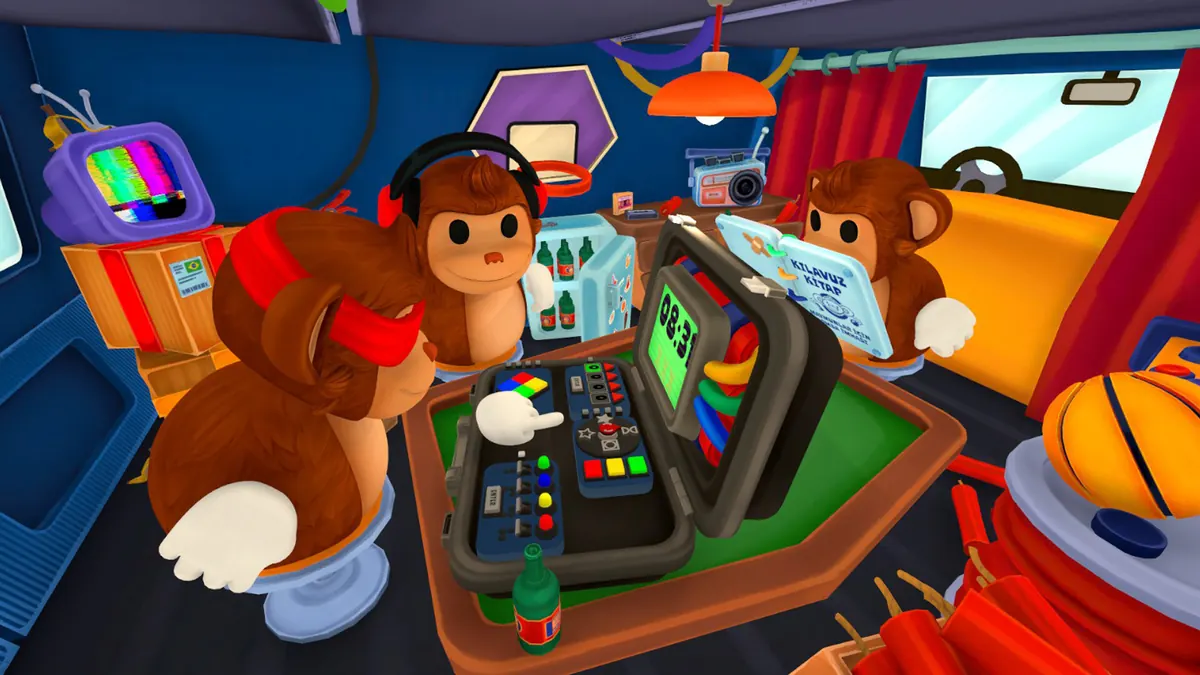
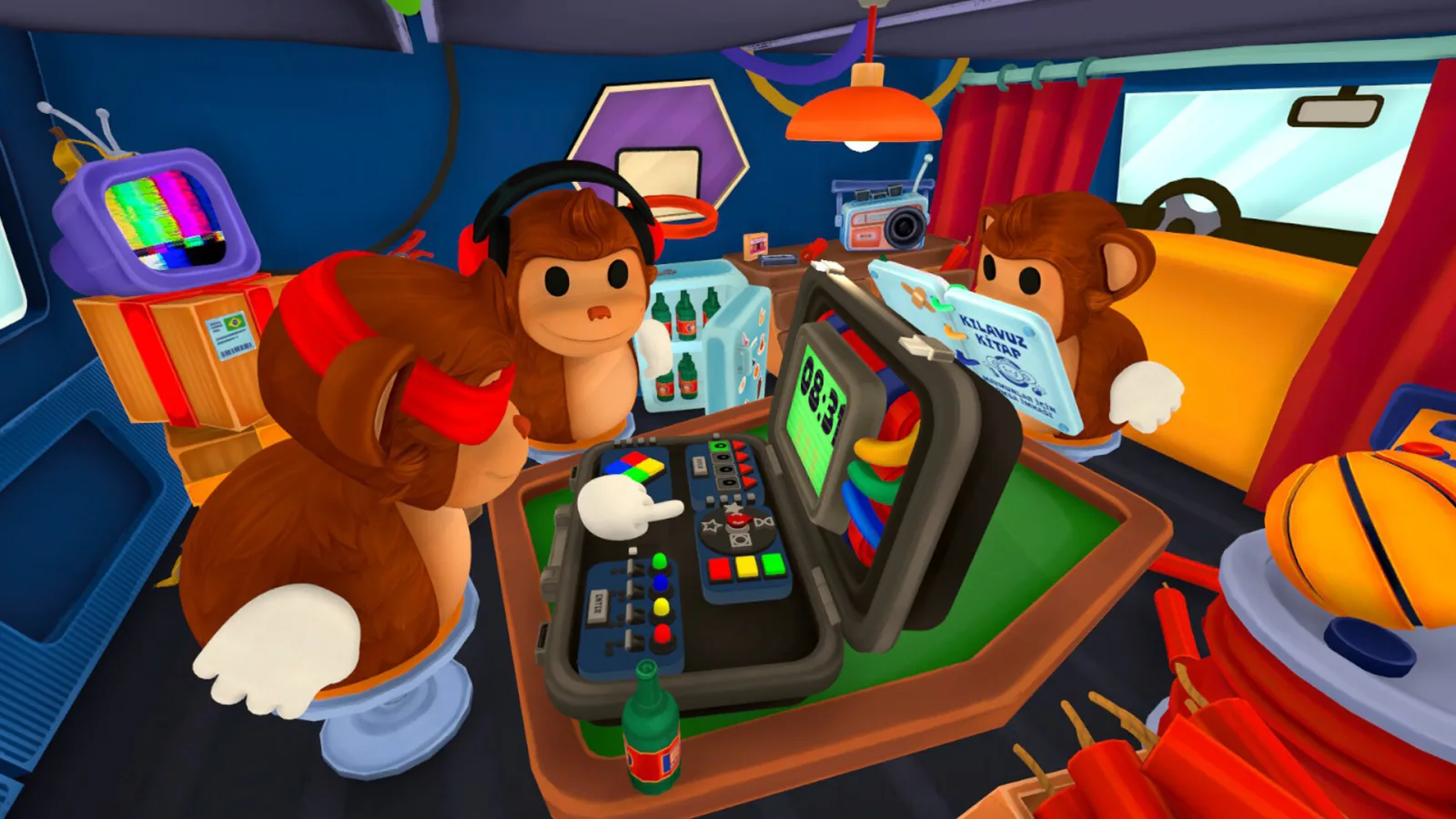
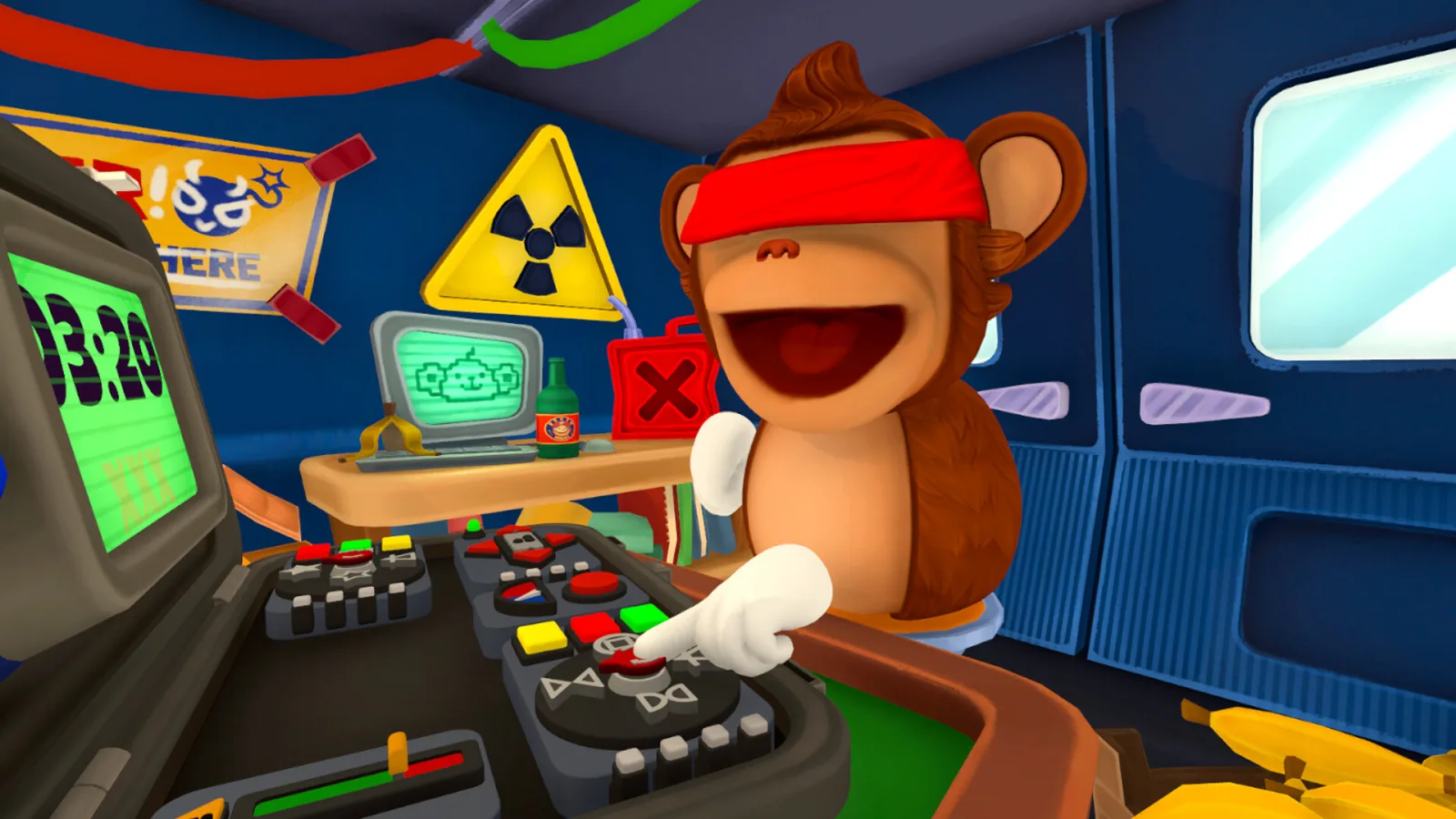
The official Steam listing is the source for product identity, platform context, and the cooperative premise. It does not establish a permanent soundboard rule. The three gameplay images on this page are official Steam media used to show the co-op bomb context; they are not sound answer screenshots. The flow image is an existing editorial concept that explains observe, relay, confirm, and act; it is not a real UI capture.
This site is a fan guide, not a file host. No APK, EXE, ZIP, standalone installer, semantic version, package size, checksum, or stable direct file URL is claimed. Use the official BOMBANANA Steam page for current availability. The official AppDetails response checked on October 13, 2026 confirmed the main App ID and release state, but did not expose a public soundboard dataset or a versioned direct download.
Recheck the article after a major game update or an official manual change. A responsible revision records the date and source instead of replacing an unknown sequence with an invented one.
FAQ
How do I play the BOMBANANA soundboard module?
Freeze the panel, choose a fixed listening order, report every cue and indicator, let the manual reader choose the branch, repeat one confirmed action, and listen again after the state changes.
Is there a fixed BOMBANANA soundboard answer?
No permanent sequence is verified for every current build. Treat the live audio state and current in-game manual as the source for the action.
What is the BOMBANANA soundboard module tutorial variant?
It is the same narrow intent: learn how to record cue order, silence, duration, and indicators before the team confirms one action.
What should I do when the soundboard is bugged or changes?
Say new state, stop input, record what changed, repeat the full listening order, and confirm a new action. Do not reuse the old sequence automatically.
Is the soundboard flow image a real screenshot?
No. The flow image is an editorial concept. The other visuals are official Steam gameplay media and do not show a permanent sound answer.
Where should I download BOMBANANA?
Use the official BOMBANANA Steam page. This fan site does not host installers, APKs, repacks, or guessed direct files.
Sources and Editorial Scope
Official product identity, platform context, and current Steam AppDetails were checked on October 13, 2026. The listening workflow, examples, comparison table, and flow diagram are fan-made editorial guidance, not developer rules or a permanent answer table.