Quick Answer: Do Not Treat a Piano Module as a Fixed Answer Sheet
There is no verified universal piano-key sequence that this page can responsibly publish for every BOMBANANA run. The public Steam product context establishes a cooperative bomb-defusal game, but it does not publish a permanent piano solution that can replace the current build and its in-game manual. If a search result shows a sequence, first ask whether it belongs to the same game, the same build, and the same panel state.
The safe answer to “how to do piano in BOMBANANA” is a repeatable observation loop. Name the panel, freeze the viewpoint, read every visible key or symbol in a fixed order, pass the facts to the manual reader, wait for one confirmed action, and scan again after the input. The purpose of this BOMBANANA piano module guide is to make that handoff fast and checkable, not to turn an unverified community pattern into an official rule.
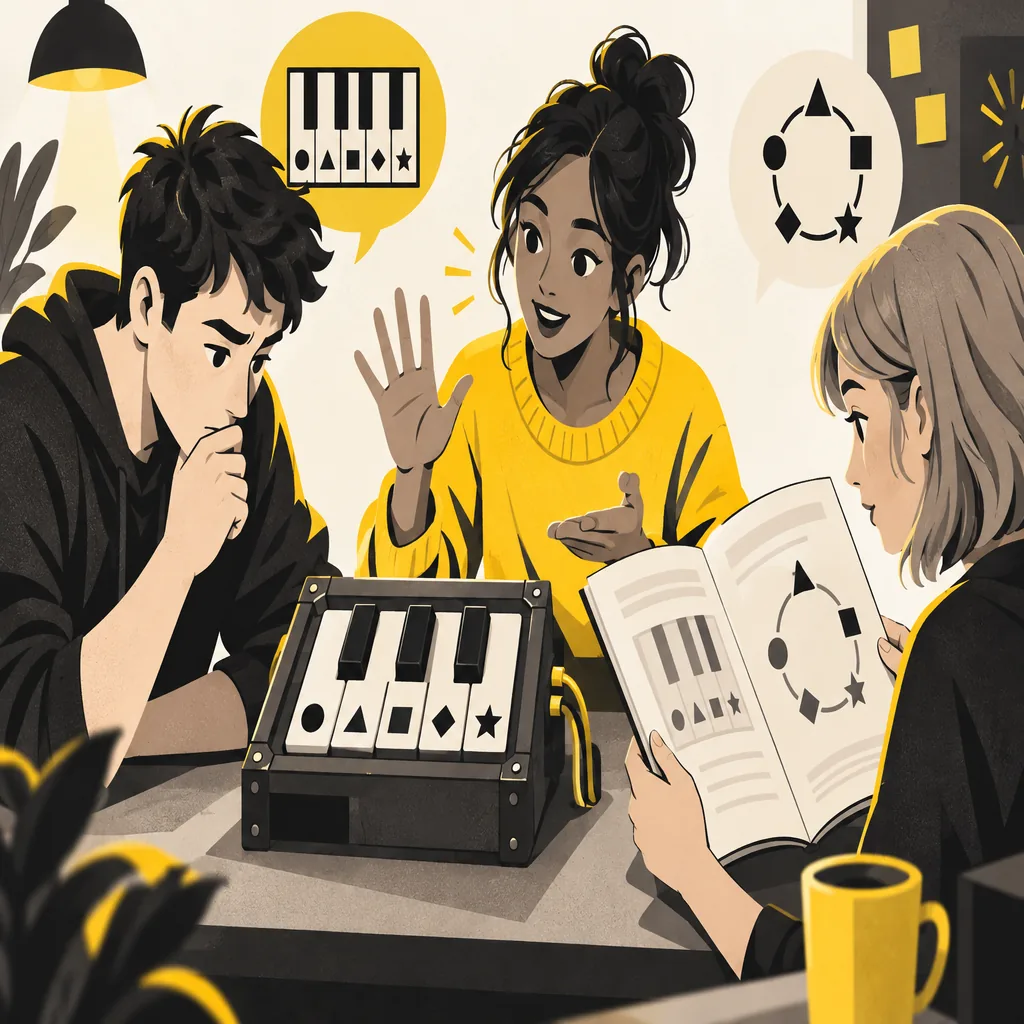
What the “BOMBANANA Piano” Search Is Really Asking
The phrase mixes several needs: a player may be trying to find the piano or keyboard module, may be looking for a piano keyboard guide, or may simply be stuck after an input changed the panel. Those are related searches, but they do not all need separate pages. A dedicated page is useful because the existing BOMBANANA modules guide covers wires, directions, numbers, switches, and state changes without a piano-specific reading protocol.
The current module rule still belongs to the game build and manual. This page supplies the reporting method around that rule. For role boundaries and manual reading, continue to the BOMBANANA manual guide; for reusable words such as stop, repeat, and new state, use the signal protocols guide.
| Search signal | What it likely asks | Best page action | What not to promise |
|---|---|---|---|
| BOMBANANA piano | Find the piano or keyboard module | Use this dedicated module guide | A permanent answer list |
| piano keyboard bombanana | Read keys, marks, or symbols | Use a fixed observation order | A guessed musical sequence |
| piano module bombanana | Understand the module role | Follow the current manual branch | An online solver |
| how to do piano in BOMBANANA | Recover from being stuck | Use the FAQ and re-scan loop | A stale screenshot as proof |
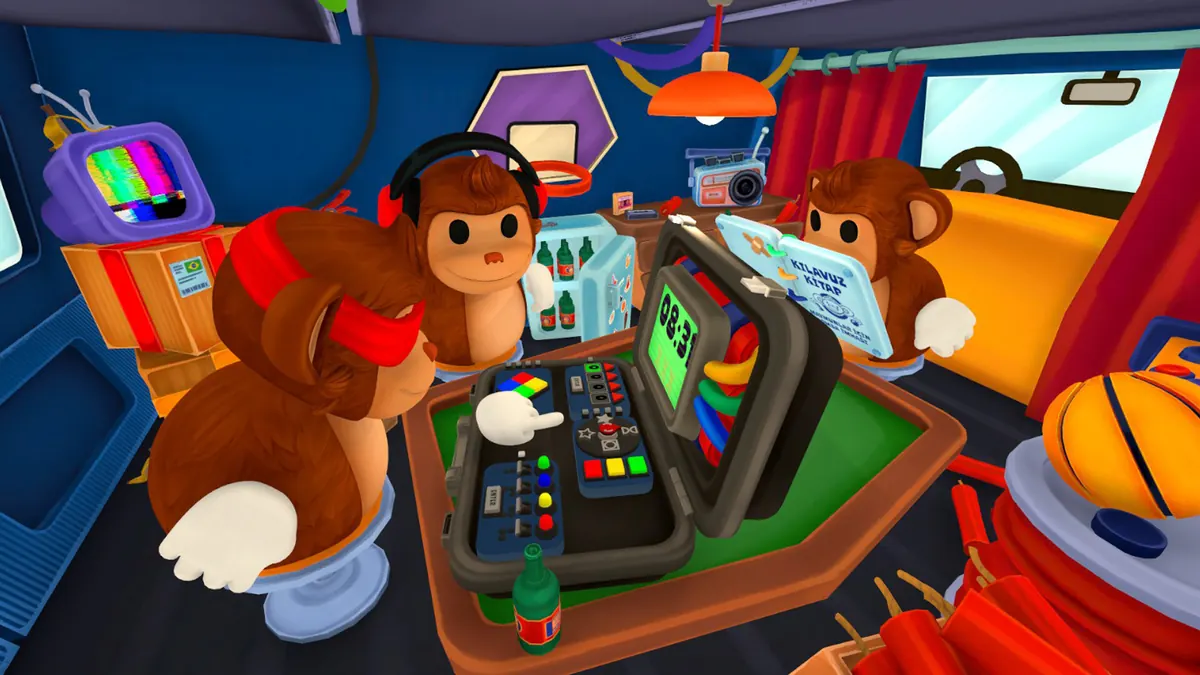
How to Identify and Record the Piano or Keyboard Module
The handler should be quick but exact. A useful report separates observation from interpretation: the handler says what is visible, while the manual reader determines what that evidence means. Do not let a familiar-looking keyboard push the team into naming a note, key number, or solution before the current manual branch is checked.
- Name the module. Say “piano module” or “keyboard module” only when the team agrees that the panel is the piano-like control. If uncertain, describe its visible controls without guessing.
- Freeze the viewpoint. Choose “panel left” and “panel right” from the handler’s view. Do not switch to the manual reader’s screen perspective halfway through the report.
- Read in one order. Usually that means left to right, then top to bottom. State the order before the values so a repeat can be compared with the first callout.
- Record marks and state. Mention colors, shapes, highlighted keys, indicators, lights, labels, or anything that changes. Repeated-looking keys still need positions.
- Stop before the action. Finish the report and ask whether the manual branch is ready. A complete observation is safer than a quick guess followed by a correction.
Musical knowledge is not a substitute for puzzle evidence. A key that resembles a note, a symbol that resembles a familiar scale, or a pattern that worked in a video may be useful context, but it is not proof for the current run. Keep the raw description available until the module is confirmed.
Three-Player BOMBANANA Piano Relay
The strongest answer to a piano module question is a clean division of labor. One player handles the bomb, one reads the manual, and one acts as the bridge who repeats the final action. If two players solve the rule at the same time, the handler may receive competing commands; the relay prevents that failure.
| Role | Owns this information | Good sentence shape |
|---|---|---|
| Handler | Current screen, key positions, indicators, and post-action state | “Piano module, left to right: circle, triangle, square, diamond. Indicator is lit.” |
| Manual reader | Current rule branch and the missing fact needed to choose an action | “I have the branch. Confirm whether the indicator changed after the last input.” |
| Bridge | One final action, repeat, stop, or new-state call | “Confirmed action: press the third key once. Wait for the new state.” |
Use a callout that can be repeated without interpretation: “Piano module. Left to right: [shape, color, or mark]. Indicator: [state]. I have not pressed anything. Manual branch ready?” The bridge should not compress the report into “try the middle one”; that removes the evidence needed to catch a transcription error.
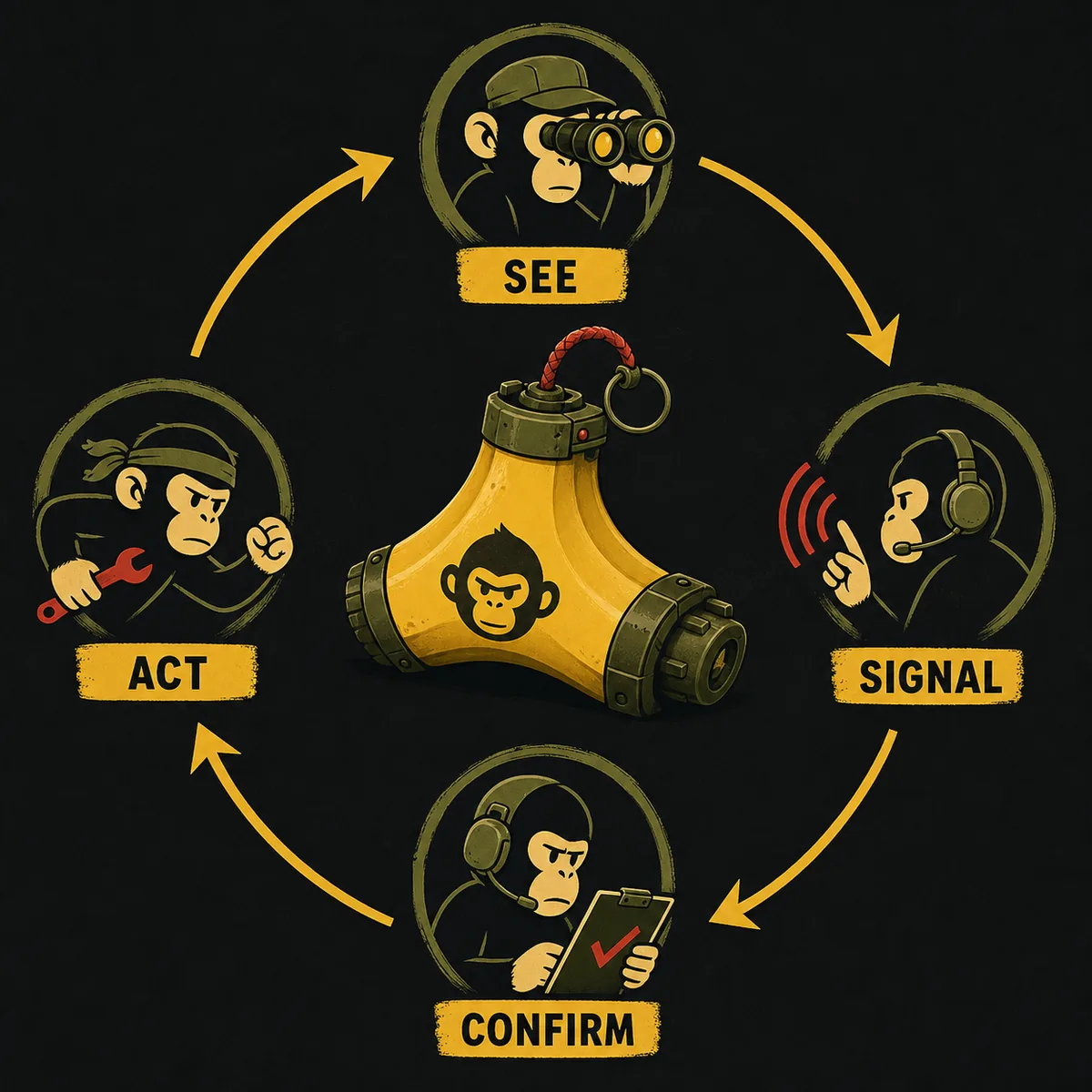
Observe → Relay → Confirm → Act → Re-scan
This five-step process is the practical core of a BOMBANANA piano keyboard guide. It works even when the exact puzzle rule is not publicly documented because it keeps the current game state in view.
- Observe. The handler reads the complete visible panel and says what is still unknown.
- Relay. The bridge repeats the facts in the same order. If a value was missed, ask one precise question instead of guessing.
- Confirm. The manual reader checks the current rule branch and names one action or requests one more observation.
- Act. The bridge repeats only the confirmed action. The handler waits until the instruction is complete before input.
- Re-scan. After the action, report solved, unchanged, changed, or failed. Any change starts a new observation cycle.
A good team can later shorten the wording, but it should not remove the checkpoints. Speed comes from predictable language, not from skipping the evidence. The BOMBANANA walkthrough applies the same scan-to-recovery idea across a full run.
What to Do When the Piano State Changes
State changes are the point where copied answers become dangerous. A highlighted key, timer, symbol, sound cue, indicator, or available control may change after one input. Say “new state,” pause the handler, and repeat the relevant report from the beginning. Do not debate whether the previous answer “should still work” while the panel is moving.
If the module fails, record the last known state and the action that preceded it. This makes the next attempt useful: the manual reader can check whether the failure came from a missed mark, a reversed perspective, an incomplete branch, or an action taken before confirmation. Avoid blame language; it hides the exact link that needs repair.
For the same reason, do not call the piano module a level. A module is a puzzle component; missions, bombs, attempts, and stages are separate progress concepts. Use the BOMBANANA levels guide when the question is about progression rather than panel solving.
Evidence Boundaries: What This Guide Can and Cannot Confirm
The official Steam product page is useful for the game’s identity, platform context, and co-op premise. It is not a substitute for the in-game manual, and it does not give this article a verified fixed piano sequence. The site also checked the current Steam API on September 22, 2026; the official route is a page fallback, not a claim that a direct installer or semantic version is publicly available.
The table below keeps facts, editorial process, and unknowns separate. That distinction is important for a new topic whose search demand is being shaped by community videos and short guides.
| Category | Safe to say | Not safe to say |
|---|---|---|
| Official context | BOMBANANA is presented as a cooperative bomb-defusal game on Steam. | Steam publishes a permanent piano answer table. |
| Editorial method | A fixed report order reduces perspective and transcription errors. | This relay is an official developer rule. |
| Visual media | The concept image explains the observation loop. | The concept image is a real in-game screenshot. |
| Current puzzle state | The current build and manual decide the actual action. | Every key sequence seen in a community clip works in every build. |
Piano Module vs. Other BOMBANANA Modules
Searches for “BOMBANANA keyboard guide” can overlap with number or switch modules because all of them require a structured callout. The difference is the evidence the handler should report first.
| Module family | First report | Main risk | Best internal guide |
|---|---|---|---|
| Piano or keyboard | Key order, marks, indicators, and current state | Guessing a musical sequence | This page plus the manual guide |
| Numbers or calculator | Expression, digits, order, and visible indicator | Pressing an arithmetic result before checking the rule | Calculator module guide |
| Wires or colors | Count, position, color, and visible state | Using “the blue one” when several match | Modules guide |
| Switches or buttons | Every current up/down or on/off position | Submitting a partial row from memory | Switch module guide |
Why This Page Does Not Offer a Piano Calculator
A calculator is appropriate only when the input variables and rule are known. Here, the public evidence does not establish one permanent piano formula or one universal key sequence. Publishing a polished-looking solver would create false confidence and could send a handler to press the wrong control.
Instead, use the page as a current-state worksheet: record the visible order, compare it with the in-game manual, confirm one action, and preserve the result of the input. If the developer later publishes a stable rule, the page can be updated with a sourced explanation; until then, the boundary is part of the answer.
The same principle applies to download claims. Use the official Steam page for the current route. This fan site does not host installers, APKs, repacks, or unverified direct files.
BOMBANANA Piano Module FAQ
Is there a fixed BOMBANANA piano answer?
No fixed sequence is verified here for every current run. Read the live panel, check the current manual branch, confirm one action, and re-scan after the state changes.
How do I do the piano thing in BOMBANANA?
Identify the piano-like module, choose a stable left-to-right order, report every visible mark and indicator, let the manual reader choose the branch, then repeat one confirmed action.
Is the piano module the same as a normal keyboard or number module?
They share the same communication method, but the first evidence differs. Piano or keyboard searches need key order and marks; number modules need the expression and rule branch.
Can I use this as a BOMBANANA piano calculator?
No. The public evidence does not establish a permanent formula, so this page teaches a verification loop instead of inventing a solver.
Where is the safe BOMBANANA download route?
Check the official BOMBANANA Steam page for current availability. This guide does not host installers or promise an unverified direct file.
Sources and Editorial Scope
Official game identity, platform context, and store status were checked against the BOMBANANA Steam listing and Steam API on September 22, 2026. The module workflow, callout examples, comparison table, and concept image are fan-made editorial guidance. They are not developer rules and should not be treated as a permanent answer table.